Comparing Environmental DNA Sampling Methods for Detecting Mammal Biodiversity
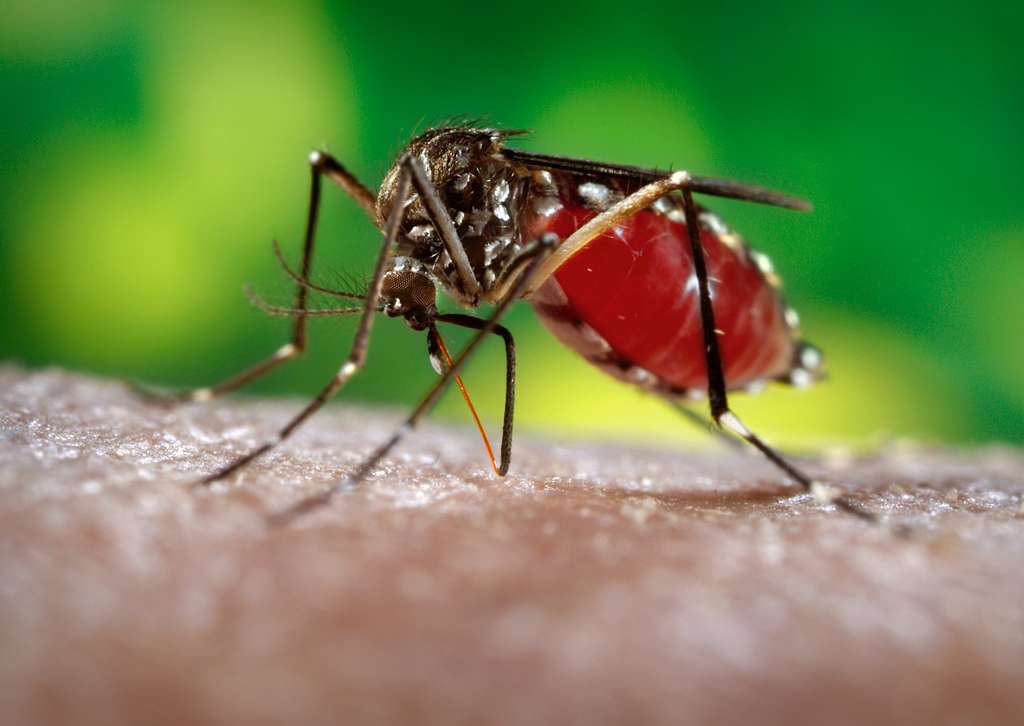
I am beginning to explore the efficacy of different environmental DNA (eDNA) sampling methods in accurately detecting local terrestrial mammal biodiversity. I will simultaneously collect eDNA from 1) bloodmeals from trapped mosquitoes, 2) water samples from the Connecticut River and its tributaries, and 3) local soil samples to compare the diversity, accuracy, and geographic scale of mammals detected across sample types. Western Massachusetts is an ecosystem with well-known and well-studied mammalian community members, making it an excellent site for this methodology-focused study.
Doctoral Dissertation Research: The Impacts of Environment and Host Evolutionary Relationships on Lemur Microbiota
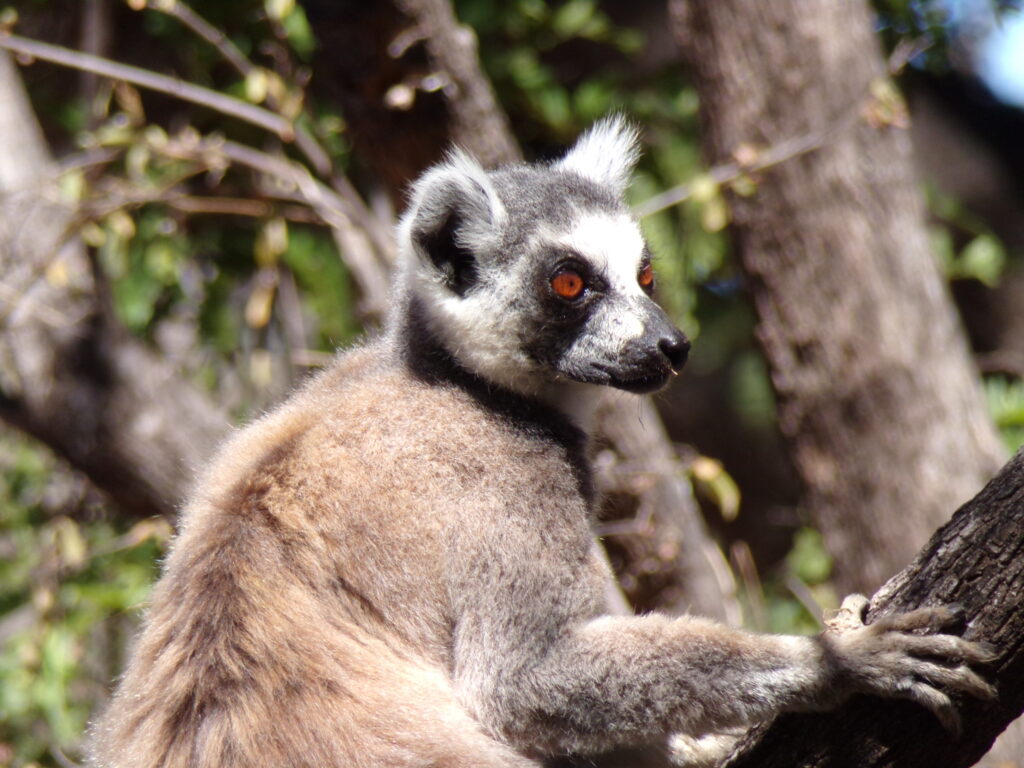
Recent studies have shown that the mammal microbiome is modified by environmental conditions, and that reduced microbiome functionality is associated with host health issues. Microbiome data in wild and captive primate populations can therefore be used to assess their health as they encounter a variety of environments. Comparative studies of the microbiome can also inform disease ecology, conservation, and captive management strategies tailored to different primate species. Therefore, this study examines how the hair, oral, and gut microbiota of nine wild and captive lemur species are determined by host phylogenetic relationships and host environment. I found that host species identity appeared to explain most of the variation in microbiome composition: lemurs in the same genus had similar microbiomes, even across different environments. Surprisingly, lemurs living in both low and high disturbance areas in the wild had less diverse microbiomes than captive lemurs, adding to the growing body of evidence that microbiome diversity may not be a consistent indicator of microbiome health. Instead, microbiome composition and differential abundance of microbes across samples may reveal more about meaningful shifts in the microbiome. Wild lemur microbiomes varied more in composition than captive lemur microbiomes, which were all similar and less variable even across different captive institutions. This suggests that captivity has a Westernizing and homogenizing effect on the microbiome. This effect was more strongly observed in the gut and hair microbiome than the oral microbiome. Based on the results of this study, the oral microbiome appears to be a conserved and highly filtered microbial community. Conversely, the hair microbiome is most subject to external effects and can serve as an indicator of the environmental microbes to which the host is exposed. The effect of host environment on the microbiome was also more strongly observed in folivorous lemurs (Propithecus spp.) compared to the other generalist and frugivorous lemurs in the study, which aligns with previous research which found that folivore microbiomes are more strongly affected by captivity and habitat disturbance. This project is the most comprehensive comparative full-body analysis of the lemur microbiome to date.
The Evolutionary Ecology of Primate Hair Coloration: A Phylogenetic Approach
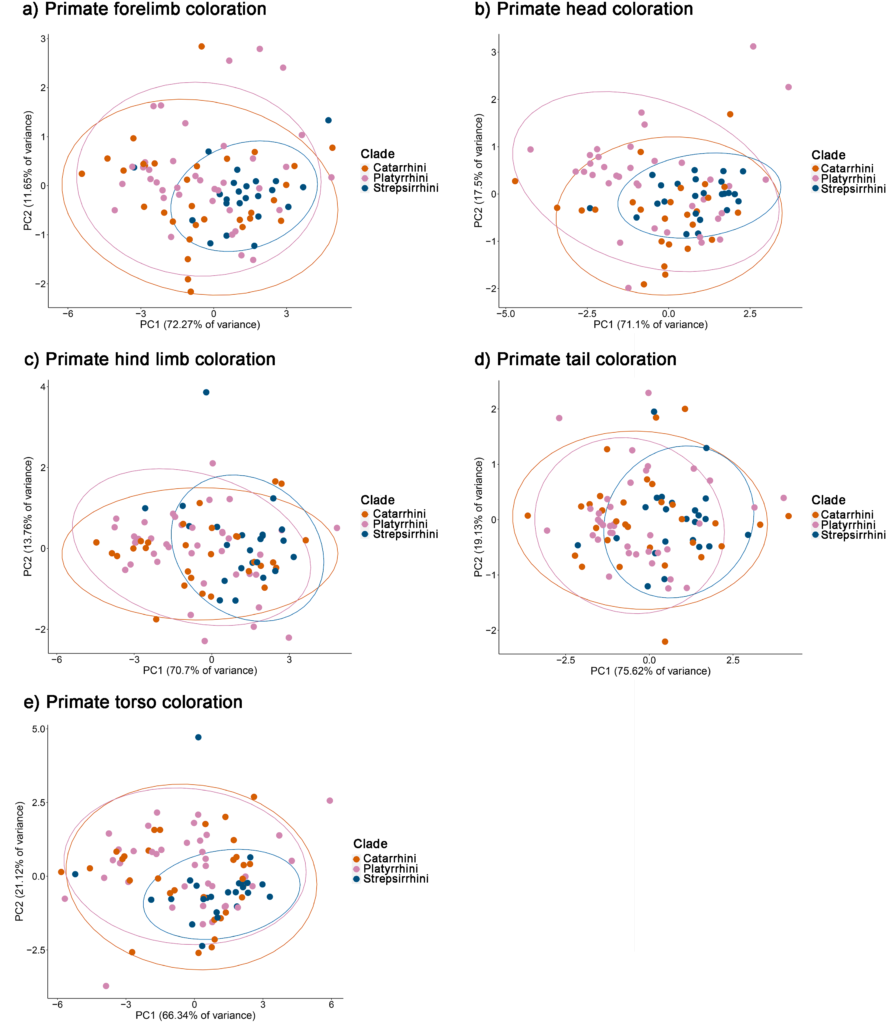
Understanding trait evolution is essential for explaining modern biological diversity, and this is particularly exemplified by studies of coloration. Recent studies have applied evolutionary models to understand animal coloration, yet we have limited knowledge of how this trait evolves in mammals in a comparative context. Here we use phylogenetic methods to examine how different traits are associated with the evolutionary diversity of primate hair color. We hypothesize that hair color evolves independently across body regions, and that variation in biological and ecological traits influence patterns of hair color evolution. To test this, we quantify the phylogenetic signal of coloration for each body region, then compare the fit of three evolutionary models and a null, non-phylogenetic model to explain color variation across 94 primate species. We then test how trait optima and rate of color evolution covary with biological traits, clade membership, and habitat. Phylogenetic signal varies across regions, with head and forelimb coloration exhibiting the highest values. Head and forelimb coloration is best explained by an Ornstein-Uhlenbeck model, which could suggest stabilizing selection, whereas a null model best fits other body regions. Rates of hair color evolution and optimal color values vary across species with different visual systems, activity patterns, habitat types, and clade memberships. These results suggest that selective pressures are acting independently across body regions and across different primate taxa. Our results emphasize the importance of investigating patterns of trait evolution across regions of the body, as well as incorporating relevant biological and ecological traits into evolutionary models.
This research was published in Journal of Mammalian Evolution (full text link here).